
Aquaparks are among the most popular summer entertainment venues, with water slides being their shining stars. However, designing a water slide is a technical process that requires not only delivering fun but also ensuring maximum user safety. Our company, specializing in the sale and installation of water slides, presents this guide to cover all aspects of aquapark water slide design, from aquapark regulations to technical details. Our goal is to provide visitors with an unforgettable experience while explaining the technical and safety standards of water slide design in detail.
In this article, we will thoroughly explore all aspects of water slide design based on the internationally recognized EN 1069-1:2010 standard. We will cover aquapark construction, slide types, pool slide integration, and specialized designs like spiral slides. Additionally, we will detail the water flow requirements for each slide type and their impact on design.
The Role of Water Slides in Aquapark Design
Aquapark design demands a blend of aesthetics, functionality, and safety. At its core are water slides. A well-designed slide enhances the park’s appeal, while a flawed design can pose serious safety risks. So, how is water slide design executed, and what factors must be considered?
Core Design Principles
Water slide design is shaped by the following core principles: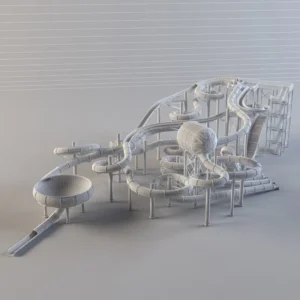
- Safety: Compliance with aquapark regulations ensures users are always safe. EN 1069-1 defines safety requirements in detail.
- Material Selection: Durable, slippery, and environmentally resistant materials are essential. For example, stainless steel stands out as a corrosion-resistant option.
- Slope and Speed Control: Slope calculations are critical for controlling user speed. In specialized designs like spiral slides, slopes and curves require precise planning.
These principles form the foundation of the aquapark construction process and must be meticulously applied at every stage.
Aquapark Regulations and the EN 1069-1 Standard
Aquapark regulations are essential for the safe design and operation of water slides. The widely accepted EN 1069-1:2010 standard in Europe is a key document that outlines safety requirements and testing methods for water slides. It serves as a guide for designers, manufacturers, and operators.
Scope of the EN 1069-1 Standard
EN 1069-1 applies to all water slides installed in public swimming pools. The standard covers general safety requirements as well as specific rules for different slide types. It also provides technical guidelines for design, calculations, and testing processes.
Importance of Safety Standards
- Slope Limits: Slide slopes are defined with specific limits for user safety. For instance, Type 3 slides can have a maximum slope of 13%.
- Material Durability: Materials must resist chlorine and UV exposure. Stainless steel offers an effective solution against corrosion (See Annex B).
- Testing Process: Every slide must undergo rigorous testing before use to prove its safety (See Section 9).
These rules apply to pool slides and all other slide types. For more information, visit our Safety Standards page.
Water Slide Types and Their Features
Aquaparks feature various slide types tailored to different user groups. The EN 1069-1 standard categorizes slides into 10 main types. Each type comes with unique design features, safety requirements, and minimum water flow rates to ensure a safe and enjoyable experience.
1. Type 1: Straight Slides for Children
- Definition: Straight slides with a height from the starting point to water level not exceeding 1 meter and an average slope of up to 70%.
- Features: Can be designed as single or wide slides (multiple users simultaneously). Type 1.2 has heights from 1000 mm to 3000 mm.
- Usage: Ideal for family pools and children’s areas.
- Water Flow: Minimum 0.00005 m³/s (3 liters/minute). This information is sourced from EN 1069-1:2010, Section 8.3.
2. Type 2: Curved and Spiral Slides
- Definition: Curved or spiral slides with an average slope of up to 70% and a height not exceeding 3000 mm.
- Features: Type 2.2 features a fixed radius and unidirectional spiral structure.
- Usage: Suitable for children seeking mild thrills. Spiral slides are among the most popular in this category.
- Water Flow: Minimum 0.00067 m³/s (40 liters/minute). This information is sourced from EN 1069-1:2010, Section 8.3.
3. Type 3-5: Single-Track Slides
- Definition: Single-track slides with varying speed levels.
- Features:
- Type 3: Maximum 13% slope, average speed ≤ 5 m/s, maximum speed ≤ 8 m/s.
- Type 4: 13-20% slope, average speed ≤ 10 m/s, maximum speed ≤ 14 m/s.
- Type 5: Minimum 20% slope, maximum speed > 14 m/s.
- Usage: Designed for teenagers and adults.
- Water Flow: Minimum 0.025 m³/s (1500 liters/minute). This information is sourced from EN 1069-1:2010, Section 8.3.
4. Type 6: Multi-Lane Slides
- Definition: Parallel-lane slides ideal for racing.
- Features:
- Type 6.1: Maximum 13% slope, speed ≤ 5 m/s.
- Type 6.2: 13-20% slope, speed ≤ 14 m/s.
- Usage: Suitable for group activities and competitions.
- Water Flow: Minimum 0.0083 m³/s (500 liters/minute) per meter of lane width. This information is sourced from EN 1069-1:2010, Section 8.3.
5. Type 7: Wide Straight Slides
- Definition: Wide, straight slides with a maximum slope of 35% and height not exceeding 8 meters.
- Features: Maximum speed ≤ 8 m/s.
- Usage: Fun for families and friend groups.
- Water Flow: Minimum 0.005 m³/s (300 liters/minute) per width. This information is sourced from EN 1069-1:2010, Section 8.3.
6. Type 8: Uphill Slides
- Definition: Slides where users can slide upward using water jets or special devices.
- Features: Offers a unique design.
- Usage: Appeals to adventure enthusiasts.
- Water Flow: Determined by the manufacturer and specified in the guide. This information is sourced from EN 1069-1:2010, Section 8.3.
7. Type 9: Wide Swinging Slides
- Definition: Wide, straight slides allowing lateral swings.
- Features: Maximum speed ≤ 14 m/s.
- Usage: Ideal for those seeking a free-sliding experience.
- Water Flow: Determined by the manufacturer and specified in the guide. This information is sourced from EN 1069-1:2010, Section 8.3.
8. Type 10: Bowl Slides
- Definition: Combination slides where users enter a circular bowl and descend via spiral paths.
- Features: Visually striking and thrilling.
- Usage: One of the most popular aquapark attractions.
- Water Flow: Determined by the manufacturer and specified in the guide. This information is sourced from EN 1069-1:2010, Section 8.3.
Summary Table of Water Flow Requirements
The following table summarizes the minimum water flow requirements for each slide type as specified in EN 1069-1:2010. These amounts are crucial for ensuring safe and efficient slide operation.
| Slide Type | Minimum Water Flow (m³/s) |
|---|---|
| Type 1.2 | 0.00005 (3 liters/minute) |
| Type 2.2 | 0.00067 (40 liters/minute) |
| Type 3, 4, and 5 | 0.025 (1500 liters/minute) |
| Type 6 | 0.0083 (500 liters/minute) – per meter of lane width |
| Type 7 | 0.005 (300 liters/minute) – per width |
| Type 8, 9, and 10 | Determined by manufacturer |
Water flow rates are critical for maintaining slide slipperiness and safety. Insufficient flow can negatively impact performance and create safety risks.
Technical Details in Water Slide Design
Water slide design requires engineering expertise and precise calculations. The EN 1069-1 standard provides technical requirements to guide designers, with water flow being a key component.
Role of Water Flow in Design
Water flow is critical for ensuring a safe and enjoyable slide experience. Proper water flow:
- Ensures smooth sliding for users.
- Reduces friction to minimize injury risks.
- Prevents surface wear and extends slide lifespan.
Water flow rates vary based on slide type, slope, and user speed. For example, high-speed slides (Type 5) require higher flow rates (at least 0.025 m³/s) to provide sufficient slipperiness for safe high-speed sliding.
Slope and Speed Calculations
A slide’s slope directly affects user speed:
- 5% Slope: Provides a slow and safe slide.
- 20% Slope: Offers a fast, adrenaline-pumping experience.
The standard recommends that maximum acceleration does not exceed 4g (for less than 0.1 seconds) or 2.6g (for 0.1 seconds or more) to ensure user comfort and safety (See Table 4).
Material Selection
Materials determine a slide’s durability and safety. EN 1069-1 mandates that materials meet the following criteria:
- Corrosion Resistance: Stainless steel is long-lasting in chlorinated environments (See Annex B).
- Bacteria Prevention: Materials must not promote bacterial growth.
- Durability: Must withstand high humidity and corrosive conditions.
- Allergen Risk: Materials must comply with EU Directive 67/548/EEC, with allergen substances not exceeding 0.1% (R43 risk statement).
Load Calculations
A slide’s static and dynamic loads must be accurately calculated:
- Water Load: For slopes less than 5%, the actual water load is considered. For Type 3-5, it’s 0.2 kN/m; for Type 7, it’s 0.2 kN/m² (See Section 6.3.2).
- User Load: For Type 3, it’s 1.5 kN/m; for Type 7, it’s 1.5 kN/m² (See Table 1).
- Wind Load: Calculated per EN 1991-1-4 and combined with 30% of centrifugal force (See Section 6.3.6).
Aquapark Construction and Water Slide Integration
Aquapark construction requires slides to align with the park’s overall design. Key considerations include:
- Platform and Access Design: Access platforms must be at least 500 mm deep (See Section 7.5.4).
- Staircases: Must comply with EN 1069-1 for safe access. Steps should be 140-240 mm high and at least 240 mm deep (See Annex C).
- Splashdown Areas: Ensure safe user stopping. EN 1069-1 defines dimensions and water depth. For Type 1 and 2, water depth ranges from 100 mm to 1350 mm based on the distance from the slide end to the pool bottom (See Table 5).
Innovative Water Slide Features
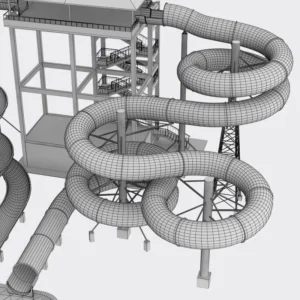 Adding innovative features to water slides can provide a competitive edge:
- LED Lighting: Transforms night slides into a visual spectacle.
- Sound Effects: Enhances user experience.
- Water Jets: Creates an uphill sliding sensation, mimicking a rollercoaster.
These features set your aquapark apart and attract more visitors.
Testing and Certification Process
Upon completion, a water slide must be tested per EN 1069-1:
- Technical Inspections: Materials, welds, and structural integrity are reviewed (See Section 9.2).
- Practical Tests: Speed, acceleration, and safety are tested with 70-110 kg testers (See Section 9.3).
- Reporting: Results are documented per EN ISO/IEC 17025 (See Section 9.4).
This process ensures the slide is safe and ready for use. Explore our certified products at our Products Page.
Why Choose Us?
Our company, Parcaqua, is a leader in water slide design and aquapark construction. Our advantages include:
- Expertise: Full compliance with EN 1069-1 standards.
- Quality: Certified, durable materials.
- Support: We’re with you at every project stage.
Conclusion
Water slide design plays a pivotal role in your aquapark’s success. With the right slide types, aquapark design, and pool slide integration, you can offer visitors a safe and memorable experience. Parcaqua designs and manufactures slides fully compliant with EN 1069-1, maximizing your aquapark’s safety and fun. For more information or to place an order, visit our Contact Page!
References
- EN 1069-1:2010 Standard, Section 8.3 – Water Flow Requirements
- EN 1069-1:2010 Standard, Section 6.3 – Load Calculations
- EN 1069-1:2010 Standard, Annex B – Stainless Steel Usage